September 30, 2026

For many people, the conversation starts quietly. A follow-up appointment, a fingertip reading that comes in a little low, and a doctor who says, “I think […]

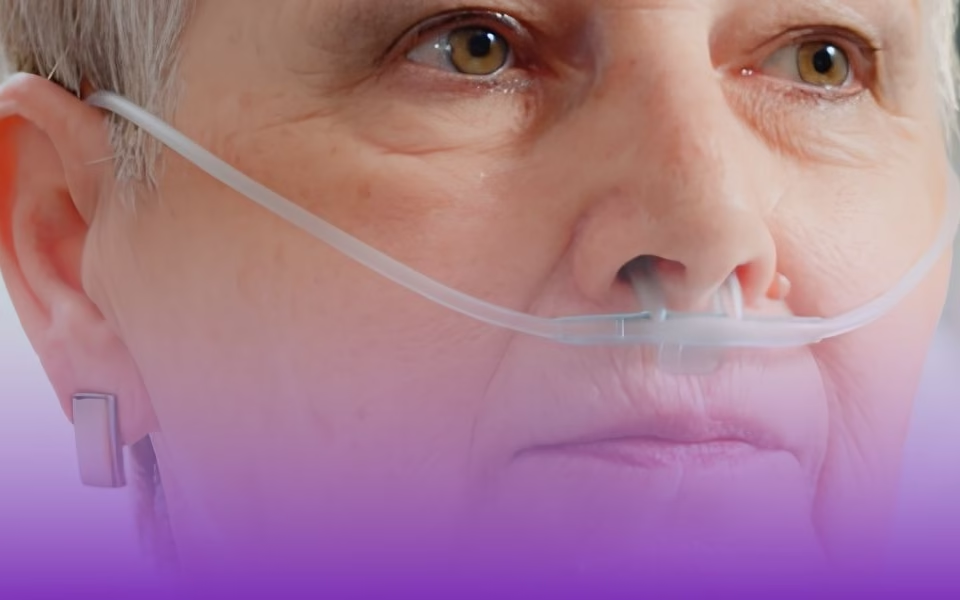
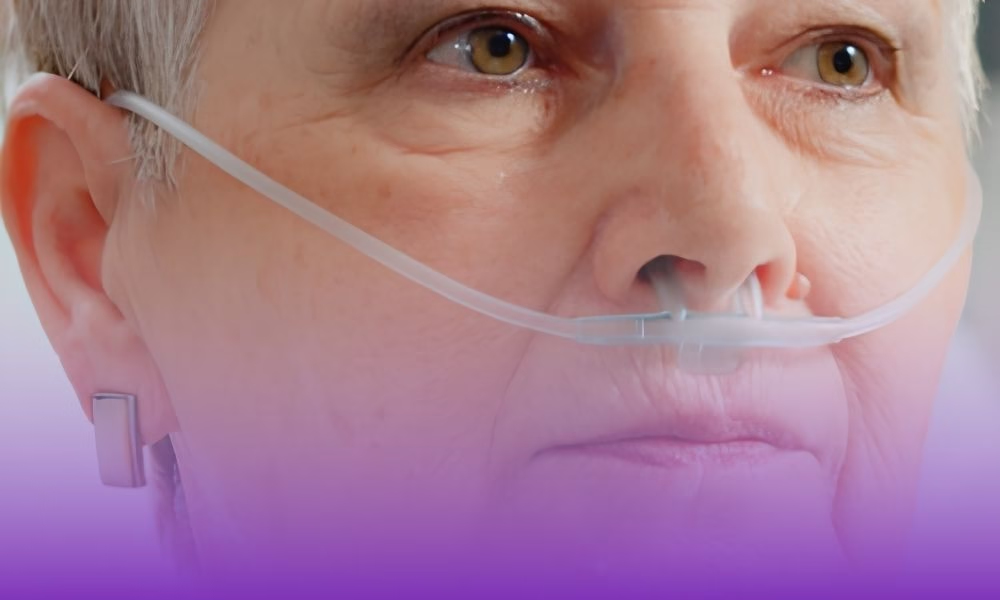
For many people, the conversation starts quietly. A follow-up appointment, a fingertip reading that comes in a little low, and a doctor who says, “I think we should talk about oxygen.” In that moment it can feel like a door closing. The truth is closer to the opposite. For thousands of Albertans, home oxygen is what opens the door back up to walks around the neighbourhood, afternoons at the rink, weekends in the mountains and a good night of sleep. This October 2, on World Oxygen Day, we want to talk about what oxygen therapy really looks like and what you should know if it may be part of your future.
The date is a small play on words. October 2 reads as “O-2,” the chemical symbol for oxygen. World Oxygen Day was launched by the COPD Foundation as a global campaign to raise awareness of oxygen therapy, improve access to equipment and support the patients, caregivers and clinicians who rely on it. The World Health Organization recognizes oxygen as an essential part of care, both for treating serious illness and for improving everyday quality of life, and the people who benefit from it range from newborns to older adults.
One of the campaign’s central goals is to break an old stereotype: the idea that only frail or inactive people wear a nasal cannula. The reality we see every day across southern Alberta is very different. Our clients are grandparents, retirees, tradespeople, hikers, volunteers and business owners. Oxygen is simply the tool that lets them keep doing what they love.
Chronic obstructive pulmonary disease, or COPD, is one of the most common reasons people are prescribed home oxygen, and it is far more widespread than most Canadians think. Self-reported surveys have placed COPD at roughly 4% of Canadians, while researchers estimate the true figure may be as high as 12% because so many cases go undiagnosed. COPD is also one of the leading reasons Canadians are admitted to hospital for a condition that could often be managed well at home.
Oxygen is also prescribed for pulmonary fibrosis, heart failure, sleep-related breathing problems, recovery after a serious illness and palliative comfort care. If you or someone you love has been told your oxygen levels are dropping, you are in very good company, and there is a well-established path forward.
When your blood oxygen levels are consistently low, your heart, brain and muscles all work harder than they should. Supplemental oxygen can ease shortness of breath, improve stamina and support better sleep, and for people with significant low oxygen levels it has been shown to improve survival. Many people tell us the biggest surprise was not the equipment itself, but how much more energy they had once they started using it as prescribed.
Modern equipment has also changed what oxygen life looks like. Today’s portable oxygen concentrators are small, quiet and battery powered, and they pull oxygen from the room air so there are no heavy tanks to refill. That means catching a grandchild’s hockey game in Airdrie, walking the Bow River pathway in Canmore or taking a road trip to see family without planning your day around a cylinder. At Peak Oxygen, portable concentrators are always available, because we believe your oxygen should fit your life rather than the other way around.
Most Albertans who need long-term home oxygen receive support through Alberta Aids to Daily Living, commonly called AADL. To qualify, you generally need to be an Alberta resident with a valid Alberta Health Care card, have a chronic condition or long-term need of six months or more, and be assessed by an approved health professional who confirms your oxygen levels meet the program’s clinical criteria. Oxygen is provided through approved specialty suppliers, which is where a home oxygen company like ours comes in.
AADL is a cost-share program, which means most clients contribute 25% of the approved benefit amount up to an annual maximum, and lower-income Albertans may qualify for an exemption. Coverage is typically approved in stages, beginning with an initial funding period, followed by interim funding and then long-term coverage once ongoing need is confirmed. Continued funding depends on actually using your oxygen as prescribed, which is one more reason good education at the start matters so much.
The forms, retesting dates and renewals can feel overwhelming, especially when you are also adjusting to a new diagnosis. That is why our team handles the AADL paperwork for our clients from start to finish, so you can focus on feeling better rather than tracking deadlines.
Here is something many people do not realize until they need oxygen: you can choose your provider. In Alberta, oxygen companies are not all the same, and the difference shows up in the small moments that shape your daily life. If oxygen may be in your future, it is worth knowing what good support looks like before you need it.
It starts with leaving the hospital. A hospital discharge should not be delayed while you wait for equipment. Peak Oxygen coordinates same-day hospital discharges, working directly with your care team so your oxygen is set up and waiting when you get home. From there, the people guiding you matter. Our respiratory therapists visit you in your home to set up your equipment, check how you are breathing in your own space, teach you and your family what to expect and adjust your plan as your needs change. That kind of clinical attention is what helps people use their oxygen confidently instead of fearfully.
Good support also means you are never left paying for the small things or waiting on hold. Cannulas, tubing and other soft goods wear out, and we replace them at no charge. When questions come up at 2 a.m. or on a long weekend, you reach a real person on our 24/7 local support line, not an automated menu or a call centre in another province. And because Peak Oxygen is locally owned and based in Calgary, we know the roads to High River, Okotoks, Cochrane, Strathmore, Banff and Canmore, and we treat the people who live along them as neighbours.
If your doctor has started monitoring your oxygen levels, a little preparation now can make the transition much smoother later. It is worth asking your care team what oxygen levels they are watching for and how often you will be tested. When you speak with a potential provider, ask whether their staff include respiratory therapists who will come to your home, whether portable concentrators are available right away or only after a waiting period, how they handle AADL applications and renewals, whether replacement supplies cost extra and who actually answers the phone after hours. The answers will tell you a great deal about the experience you can expect.
World Oxygen Day is held every year on October 2, a nod to “O-2,” the symbol for oxygen. It is a day to raise awareness of oxygen therapy, reduce stigma and celebrate the people who use it.
Only a physician can prescribe oxygen, and the decision is based on testing such as pulse oximetry, a walk test, an overnight study or arterial blood gas results. If you notice increasing breathlessness, fatigue or morning headaches, talk to your doctor about whether your oxygen levels should be checked.
Yes. Alberta Aids to Daily Living funds home oxygen for eligible Albertans who meet clinical criteria, on a cost-share basis with exemptions available for lower-income clients. An approved specialty supplier such as Peak Oxygen can help you through the application and renewal process.
Yes. You have the right to choose the approved oxygen provider that best fits your needs, and switching is more straightforward than many people expect. We can walk you through the process and coordinate the change so there is no gap in your therapy.
In most cases, yes. Portable oxygen concentrators make road trips and even air travel far more manageable, although airlines have their own approval requirements for specific devices. Our team can help you plan ahead so your equipment and battery supply match your itinerary.
Whether you are starting oxygen tomorrow, caring for a parent whose needs are changing or simply want to understand your options before the conversation happens, you do not have to figure it out alone. Peak Oxygen is a locally owned home oxygen provider serving Calgary and communities across southern Alberta, with respiratory therapists who come to you, same-day hospital discharge coordination, portable concentrators always available, AADL paperwork handled for you and a real local person on the line 24 hours a day.
Have questions about home oxygen?