How a Registered Respiratory Therapist Improves Your Home Oxygen

Why the clinician behind your home oxygen matters more than you think
When most people picture getting home oxygen, they picture a delivery. A machine arrives, someone shows you the on switch, and that is that. But there is a meaningful difference between having equipment dropped off and having your oxygen therapy managed by a clinician. That difference has a name: the Registered Respiratory Therapist, or RRT.
If you are choosing a home oxygen provider in southern Alberta, understanding what an RRT does, and why not every provider involves one, can change how you think about your care.
What is a Registered Respiratory Therapist?
A Registered Respiratory Therapist is a licensed healthcare professional who specializes in the lungs and breathing. RRTs complete formal clinical training and are regulated, the same way nurses and other healthcare professionals are. They work in hospitals, intensive care units, emergency departments, and increasingly in home care, where they bring that clinical training directly to your living room.
In short, an RRT is not a delivery driver who learned the equipment. An RRT is a breathing specialist who understands the medicine behind your oxygen, not just the hardware.
Equipment delivery versus clinical care
Here is the distinction that matters most. Some home oxygen companies operate on a delivery model: a driver brings the concentrator, plugs it in, and leaves. The equipment may work fine, but no one with clinical training has assessed whether it is set up correctly for you, your home, and your condition.
A provider that involves an RRT delivers something different. The setup becomes a clinical visit. Your flow is checked against your prescription, your equipment is matched to your needs, your technique is reviewed, and your questions are answered by someone qualified to answer them. The machine is the same. The care around it is not.
What an RRT actually does for your therapy
The value of an RRT shows up in specific, practical ways throughout your time on oxygen.
Getting your setup right the first time
An RRT confirms that your equipment matches your prescription and your daily life. They check that your flow rate is delivering what your physician ordered, that your concentrator suits your mobility and home, and that your tubing length works for how you actually move around. Getting this right at the start prevents problems later.
Teaching you to use your equipment confidently
New equipment is intimidating. An RRT walks you through how everything works, how to clean and maintain it, how to spot a problem, and what the alarms mean. They can also coach you on breathing techniques like pursed-lip and diaphragmatic breathing, which many patients with lung conditions find genuinely helpful but are rarely taught.
Fitting your cannula and preventing irritation
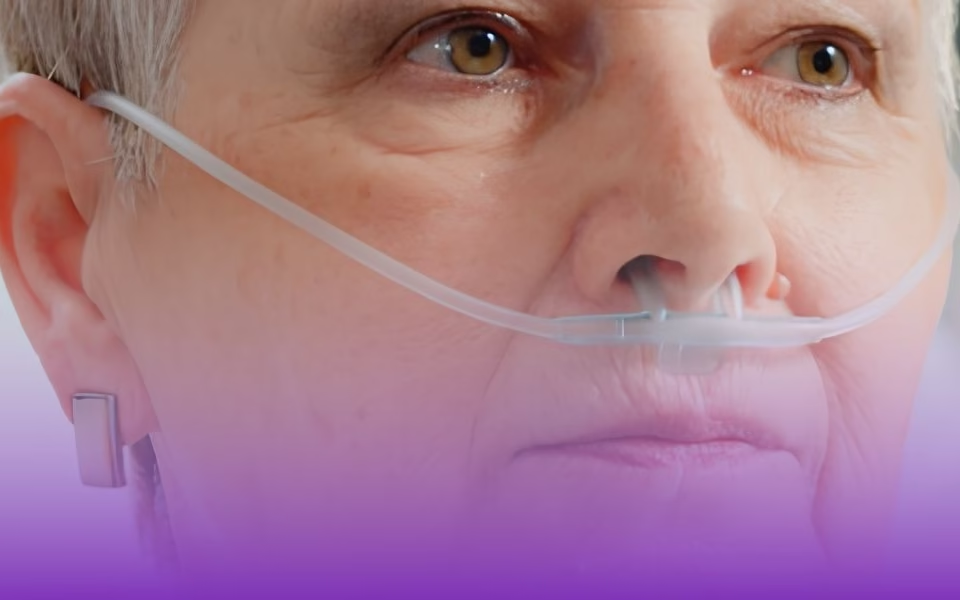
Small comfort issues become big problems over weeks and months. An RRT makes sure your nasal cannula fits properly, addresses soreness behind the ears or under the nose, and adjusts your setup so you can wear your oxygen comfortably for as long as you need it. There are many different types of cannulas, get one that fits you correctly.
Spotting issues before they become emergencies
Because an RRT understands the clinical picture, they can recognize early signs that something is not right, whether that is your therapy, your technique, or your underlying condition. That clinical eye is something a delivery-only model simply cannot offer.
Being a knowledgeable point of contact
When you have a question at home, it matters whether the person answering understands oxygen therapy or is reading from a script. A provider with RRT-level expertise gives you informed answers, not guesswork.
Why this matters at hospital discharge
The transition from hospital to home is where clinical expertise pays off most. You are leaving a setting full of healthcare professionals and arriving home, where the support you have is whatever your oxygen provider offers. A provider that brings RRT expertise to your discharge essentially extends that clinical care into your home, so the handoff is smooth and you are set up safely from day one.
What to ask a provider
When you are comparing home oxygen companies, one question cuts to the heart of the matter:
“Is a Registered Respiratory Therapist involved in my setup and care, or is my equipment simply delivered?”
The answer tells you a great deal about the kind of care you can expect. If the answer is vague, or if the model is delivery-only, you may be getting equipment without the clinical support that makes oxygen therapy safe and effective.
RRT expertise is built into Peak Oxygen
Peak Oxygen was founded on the belief that home oxygen is healthcare, not just equipment rental. That is why Registered Respiratory Therapist expertise is part of how we serve patients across southern Alberta, alongside in-home visits, no-charge soft goods, AADL paperwork handled for you, and 24/7 live local support.
The result is care that treats your oxygen therapy as what it is: an important part of your health that deserves a clinician’s attention, not just a delivery slip.
If you or a loved one needs home oxygen, reach out to Peak Oxygen and find out what a difference clinical expertise makes.
Peak Oxygen, southern Alberta’s local home oxygen provider.
Visit peakoxygen.ca or call us at 587-747-7699
By Robert Biddlecombe
July 10, 2026