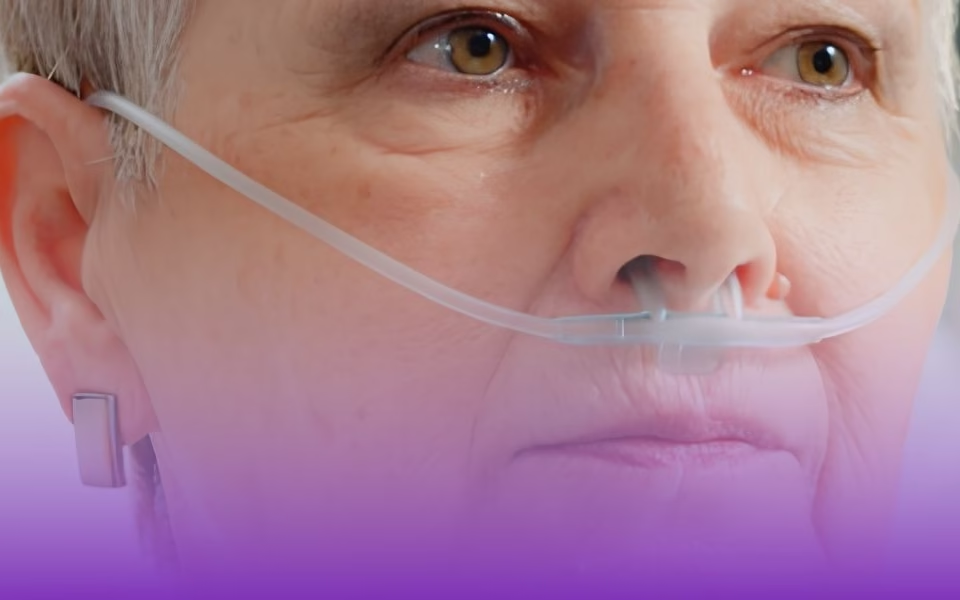
Living with COPD on Home Oxygen

Living with COPD on Home Oxygen: Practical Daily Tips
A guide for patients and families in Calgary , Okotoks, High River, and surrounding communities
A diagnosis of COPD and a prescription for home oxygen can feel like your whole life just got more complicated. Suddenly there is equipment in your living room, tubing to manage, and a long list of things you are not sure you are allowed to do anymore. The good news is that thousands of people live full, active, comfortable lives on home oxygen. The equipment is there to give you freedom, not take it away. The difference usually comes down to a handful of practical daily habits.
This guide covers the everyday tips that make living with COPD on oxygen easier, safer, and a lot less stressful.
Build your day around energy, not just oxygen
COPD does not just affect your breathing. It affects how much energy you have, and energy is a resource you can manage. Many people find that pacing their activities makes a bigger difference than anything else. Try spreading demanding tasks across the day instead of stacking them in the morning. Sit down for tasks that do not require standing, like chopping vegetables or folding laundry. Build in short rest breaks before you feel exhausted, not after. The goal is to stay ahead of the fatigue rather than chasing it.
Master your breathing techniques
Two simple techniques can help enormously when you feel short of breath, and they cost nothing.
Pursed-lip breathing slows your breathing and keeps your airways open longer. Breathe in gently through your nose for two counts, then breathe out slowly through pursed lips, as if blowing out a candle, for four counts. Use it during activity or any time you feel winded.
Diaphragmatic breathing, or belly breathing, helps you use your diaphragm more efficiently. Place a hand on your belly, breathe in through your nose so your belly rises, then breathe out slowly. Practising when you are calm makes it easier to use when you are not.
A Registered Respiratory Therapist can coach you through both techniques in person, which is one of the advantages of working with a provider that involves clinicians in your care.
Take care of your tubing and cannula
Your nasal cannula and tubing are the part of the system you touch most, and small habits keep them working well.
- Keep tubing untangled and run it along walls and furniture to avoid trip hazards.
- Longer tubing gives you more freedom to move, but very long runs can reduce comfort. Ask your provider what length suits your home.
- Replace your cannula regularly. A worn or stiff cannula is less comfortable and can cause blockages
- Watch for soreness behind your ears or under your nose, and use padding or a different style if irritation develops
If soft goods like cannulas and tubing are a recurring cost, ask your provider whether they are included. At Peak Oxygen, soft goods are provided at no charge, so you never have to ration supplies to save money.
Stay on top of your flow rate
Your prescribed oxygen flow rate was set by your care team for a reason, and it is not something to adjust on your own. Turning it up because you feel breathless can be harmful for some people with COPD, and turning it down to “save” oxygen defeats the purpose of the therapy.
If you consistently feel short of breath at your prescribed setting, that is a signal to call your provider or physician, not to change the dial. A good provider will help you sort out whether the issue is equipment, activity level, or something that needs medical attention.
Keep moving
It feels counterintuitive, but staying active is one of the best things you can do for COPD. Gentle, regular movement strengthens the muscles that support your breathing and helps you do more with the oxygen you have. Many patients benefit from pulmonary rehabilitation programs, which combine supervised exercise with education.
Start small. A short daily walk, light stretching, or simple seated exercises all count. Use your portable oxygen and your pursed-lip breathing, and build up gradually. Always check with your care team before starting a new exercise routine.
Make your home oxygen-safe
Oxygen itself does not burn, but it makes other things burn faster and hotter, so a few safety habits are essential.
- Keep oxygen at least three metres away from open flames, including stoves, candles, gas fireplaces, and cigarettes.
- Do not smoke, and do not allow smoking near your equipment. This is non-negotiable.
- Avoid petroleum-based products like Vaseline on your nose or lips. Use water-based alternatives instead.
- Keep concentrators in a well-ventilated spot, not in a closet or tight corner.
An in-home visit from your provider is the easiest way to catch hazards you might miss. Peak Oxygen offers in-home visits so your setup fits your real living space.
Plan for power outages and weather
In southern Alberta, weather and the occasional power outage are facts of life, and a little planning prevents a lot of worry. Talk to your provider about a backup plan if you rely on an electric concentrator. Know how long any backup cylinders last, keep them filled, and keep your provider’s number somewhere easy to find. A local provider with 24/7 live support can talk you through problems in real time, which matters most when something goes wrong outside business hours.
Look after the rest of your health
Living well with COPD is bigger than oxygen alone. A few habits protect your lungs and your overall wellbeing:
- Stay current on flu, pneumonia, and other recommended vaccinations, since respiratory infections hit harder with COPD
- Take your medications, including inhalers, exactly as prescribed
- Stay hydrated, which helps keep mucus thinner and easier to clear
- Watch for warning signs of a flare-up, like increased breathlessness, more mucus, or a change in mucus colour, and act early
Know when to call for help
Call your care team or seek urgent help if you notice severe or sudden shortness of breath, chest pain, confusion, blue-tinged lips or fingertips, or a fever that will not come down. Trust your instincts. It is always better to ask than to wait.
For day-to-day questions about your equipment, flow, or supplies, your oxygen provider should be easy to reach. A local southern Alberta team that answers around the clock makes a real difference when you simply need a quick answer.
You are not managing this alone
COPD and home oxygen take some adjustment, but with the right habits and the right support team, most people find their footing faster than they expect. The equipment becomes routine, the techniques become second nature, and life keeps going.
Peak Oxygen supports patients across southern Alberta with Registered Respiratory Therapist expertise, in-home visits, no-charge soft goods, AADL paperwork handled for you, and 24/7 live local support. If you have questions about living well on home oxygen, reach out and we will help.
Peak Oxygen, southern Alberta’s local home oxygen provider. Visit peakoxygen.ca or call us at 587-747-7699
By Robert Biddlecombe
July 11, 2026